



Description
No Place to Go
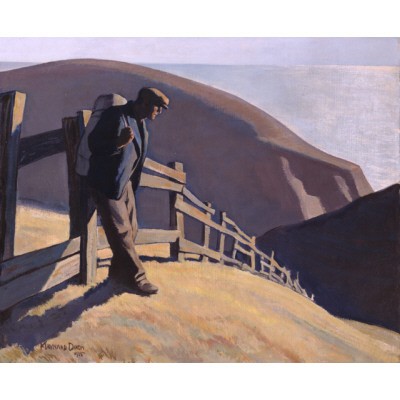
Maynard Dixon, 1935
In the mid-19th century, the vast American landscape indicated the promise of prosperity and unlimited possibilities. Here, however, it turns into disappointment, the landscape becoming a prison. Dixon, primarily known for his panoramic vistas of the American West, produced realist paintings of Depression-era figures during the 1930s. In this painting, the dejected form of a man slumps against a fence that cuts off any escape. No Place to Go reflects the lack of purpose felt by the unemployed during the Great Depression.
This piece was displayed in our American Dreams and People in a Hard Land exhibitions.
What’s Going On?
A male figure leans against a wooden split-rail fence on a rolling hillside. He wears brown pants, a blue coat, and a brown cap with a gray bed roll hung over his right shoulder. He looks towards the right of the canvas. Large hills are visible in the middle ground, with a vast pale blue ocean in the upper right and slightly grey sky above.
More About Dixon
Originally from California, Dixon painted subjects in Arizona, New Mexico and eventually settled in Southern Utah. There he developed his signature style of unique compositions, often featuring low horizons and simplified, yet imposing clouds and rock formations in bold colors.
Dixon also focused on preserving the image of Native American peoples whom he believed were disappearing from the American West. While married to the famous photographer Dorothea Lange, Dixon also focused on social realist subjects depicting people struggling to make a living during the Great Depression.


Reviews
There are no reviews yet.